
Book review
Bring Me Back a Son
David Scott Hay’s The Butcher of Nazareth is sold as a hunt to stop the future. Underneath, it is about a man who wants a birth.
The first sentence of The Butcher of Nazareth is a job description: “The Butcher’s task stood simple though arduous: kill one more child.” The child is about thirty by now. The Butcher, a slaughterman who once carried out Herod’s massacre of the infants, has spent three decades laying road tiles in Egypt as penance. Then a fever shows him what the surviving boy’s followers will do with the next two thousand years: crosses, inquisitions, burnings, and at the end a “flame deluge” that turns a desert to glass. So he goes back to finish the work.
That is the pitch, and it is a good one. It is not, I think, what the book is about.
The verses after the massacre
The massacre of the innocents gets a few verses in one gospel. Matthew reports Herod’s order (verse 16, which Hay uses as his epigraph) and then reaches for Jeremiah: “A voice is heard in Ramah, weeping and great mourning, Rachel weeping for her children and refusing to be comforted, because they are no more” (Matthew 2:18, NIV). Then the gospel moves on. Hay stays. His Judea is full of towns missing a whole generation of boys, and of parents who took the phrase “refusing to be comforted” as a plan. Nearly every adult here is Rachel, and nearly every one has a scheme for getting the child back.
Jim McLeod at Ginger Nuts of Horror has already asked the obvious question, whether foresight can justify atrocity. I want to ask a narrower one. What does this man actually want?
The father’s arithmetic
The Butcher’s own crime comes out in Book II, in a Jerusalem cell, on terms he proposes himself: “A story for a story?” A Black Mask enters his house during the Culling and offers terms: kill your weeks-old son and your wife and daughters live. The sweetener is pure replacement logic: “you’ll be able to produce another son or two, whose dowries would enrich your life.” The Butcher accepts, reasoning that the baby has no personality yet and no name. The narration calls it “twisted rationale.” His verdict on himself afterward is the finest sentence in the book: “I had salted any garden I may have grown.”
Keep that logic in view, because the novel never lets it go. In Bethlehem, Cassia, the midwife who delivered Jesus and lost her own son to the Black Masks, keeps the embalmed infant in a chest and prays that the grown messiah will raise him, so the child she is carrying will have a brother. In the desert the Butcher’s wife, Sarah, appears to him and forgives him (or seems to; the novel later lets him doubt she was ever there), then sends him north with one instruction: “Bring me back a son.” By Book III he has a dead baby strapped under his tunic, and the assassination has quietly become a petition. He will ask Jesus for a resurrection. A resurrection is a request for a birth, made by a man who once agreed a son could be swapped for another.
Hay has said the dead baby “was not in my original outlines and changed the trajectory of the novel” (Ginger Nuts of Horror interview). It changed the argument too.
Where the analogy holds, and where it breaks
Here is the antinatalist reading, put plainly. The Butcher reasons from foreseen suffering to the judgement that one life should not go on, and the suffering he sees is enormous, reaching “generations that had not yet been born, nations that had not yet risen” (Book II). End one beginning and spare everything downstream of it. Pessimists will recognize the shape. So will everyone who has ever caricatured them.
The strongest objection is that this is not antinatalism at all. The Butcher’s logic is consequentialist preemption: kill a specific, living man to prevent harms that other people will commit centuries later. Antinatalism, in David Benatar’s version, concerns whether to create new people, and Benatar is explicit that the bar for ending a life sits much higher than the bar for not starting one: “We require stronger justification for ending a life than for not starting one” (Better Never to Have Been, chapter 2). On that view the Butcher is not an antinatalist with a knife. He is a murderer with a forecast.
The objection is right, and the novel agrees with it. The analogy holds at exactly one joint: the step from the suffering a life will set loose to the wish that it had never begun. It fails everywhere else. The target already exists, and has a mother, a betrothed, and bees. The forecast is a fever no one can check, it shows the crimes and leaves out everything else, and most of it will be committed by strangers. Jesus answers the blame directly: “The person you blame does not exist anymore. I am no longer that babe in the manger; I am no longer that threat to Herod” (Book III). An antinatalist should be the first to accept this. The asymmetry argument is a reason not to create a person. It was never a licence to punish one for having been created.
What makes the book matter is the next move. Alone with his target at last, the Butcher drops the forecast. If the dead child could breathe, “He would let this Nazarene live and let the future suffer its own fate. If he could but have his family back now” (Book III). Every one of those unborn generations is suddenly negotiable against one baby. The man who set out to prevent suffering on a cosmic scale will trade all of it for a son.
So the real antinatalist content of The Butcher of Nazareth is not the hunt. It is the diagnosis. Herod kills children to protect a throne. A Black Mask offers a father replacement sons. Cassia wants her boy back so her next child will have a brother. Sarah’s forgiveness comes with a condition. Everyone treats a child as the cure for an adult’s grief, and the book keeps itemizing what that cure costs. The line that stays with me belongs to the Thief, stoned beside the Butcher in Jerusalem: “They have decided for all of us.” Then: “Have we no say in this?” He means the mob. It fits every child in the novel, none of whom were asked.
Spoiler warning (Book III, not the ending). Jesus cannot raise the child. When he touches the eyelids, they crumble to dust. The tile the Butcher engraves for the grave bears not the midwife’s son’s name but the one he and Sarah had chosen for their own. The resurrection was a second attempt at a birth, and nobody gets one.
I won’t give away the ending. It doesn’t resolve the question so much as put it back on the road, with company.
The book itself
None of this would matter if the novel were a seminar, and it isn’t. Hay writes violence with a tradesman’s attention. The Butcher reads the world in joints, cuts and drainage, and even his wisdom comes from the shop: “Surprises often led to burials.” The Bethlehem section’s set piece, a staged Nativity performed for counterfeit Persian royals who have paid for a story, is very funny and then very much not. The stoning in Jerusalem is the best extended scene in the book, a study of a crowd choosing its rocks.
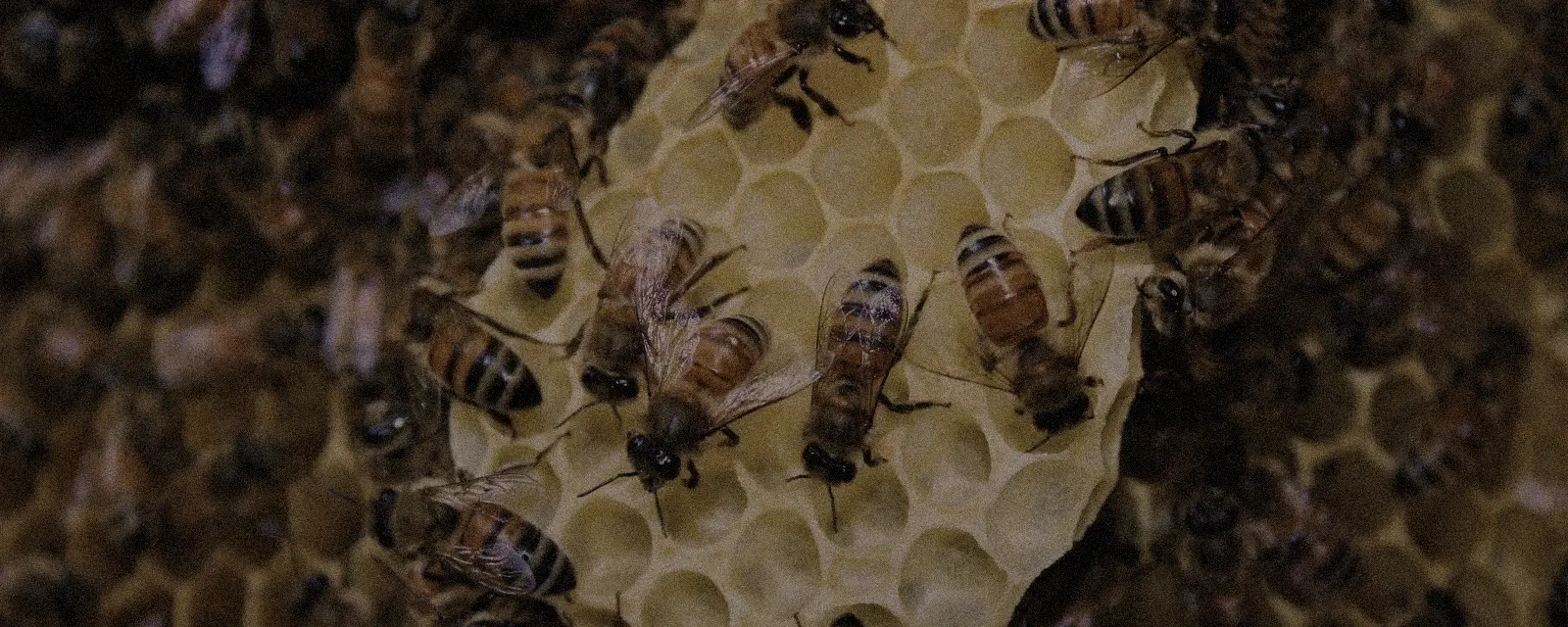
Hay’s Jesus is the great risk and the quiet success. He is heavyset, honey-sticky and limping, a beekeeper still waiting for a call that hasn’t come. He turns away a band of marauders with honeycomb. He grieves the boys who died in his place: “Am I a living reminder of what might have been?” (Book III). He is never mocked. He may be the most decent person on the page, which is exactly what makes the Butcher’s arithmetic unbearable. Readers who arrive expecting a hatchet job will find a careful, unorthodox portrait. Readers who want a Sunday-school Jesus should look elsewhere.
The problems are real, and readers who gave up on it are not wrong about them. Jesus doesn’t appear as an adult until Book III, past the halfway mark, and Book I’s Bethlehem episodes take their time getting anywhere. The typography will split people: italic interior lines, frequent one-sentence paragraphs, and a small X ornament between sections, more than a hundred of them in the ebook (it is hard not to see the goat’s X-shaped pupil in it). “The Lord will guide my hand” lands thirteen times, sometimes as incantation and sometimes as filler. The ebook I read has small slips too: “Haindmaiden,” “But I no closer,” a doubled “the the.” And the blurb that keeps following the book around, “The New Testament à la Cormac McCarthy,” credited to Kirkus, does it no favours. I could not find a Kirkus review behind it. Hay has named Blood Meridian as a touchstone for his mythic metaphors, but he has also said he “shied away from that level of linguistic gymnastics,” and it shows. His sentences are short, plain and wry. That isn’t McCarthy, and it doesn’t need to be.
Verdict
The Butcher of Nazareth is a horror novel about a man convinced that one life is the root of all future suffering, who finds out, in a graveyard full of the Culling’s children, that what he wanted all along was another one. It is grim, often funny, serious about theology, and smarter about grief than about pacing. In the Afterword, Hay says the “flame deluge” comes from Walter M. Miller Jr.’s A Canticle for Leibowitz, where it means nuclear holocaust. The Butcher’s apocalypse, in other words, is ours. The novel’s answer to him is not that the future will be fine. It is that you cannot kill a man to prevent it, and you cannot order up a birth to undo a grief.
A eulogy for the son nobody can bring back, which did not stop anyone asking. Four candles out of five.
The Butcher of Nazareth by David Scott Hay. First published 2026 by Whisk(e)y Tit as the first title from its Headless imprint (listed lengths run from 307 to 338 pages). Forthcoming from Saga Press. Unabridged audiobook read by Brian Alan Hill (6 hr 39 min, Simon Maverick), available on Spotify.
Content warnings: infanticide, graphic violence including against infants and a pregnant woman, stoning, immolation, mutilation, animal slaughter, sexual content, religious violence.
Thanks for reading. More essays, or follow on Instagram.
Notice
Next of Kin
New essays by email when they are filed, with the occasional roundup of 3 AM reviews. Nothing else. Unsubscribe whenever the urge passes.
Confirm by email. No spam, no sharing.